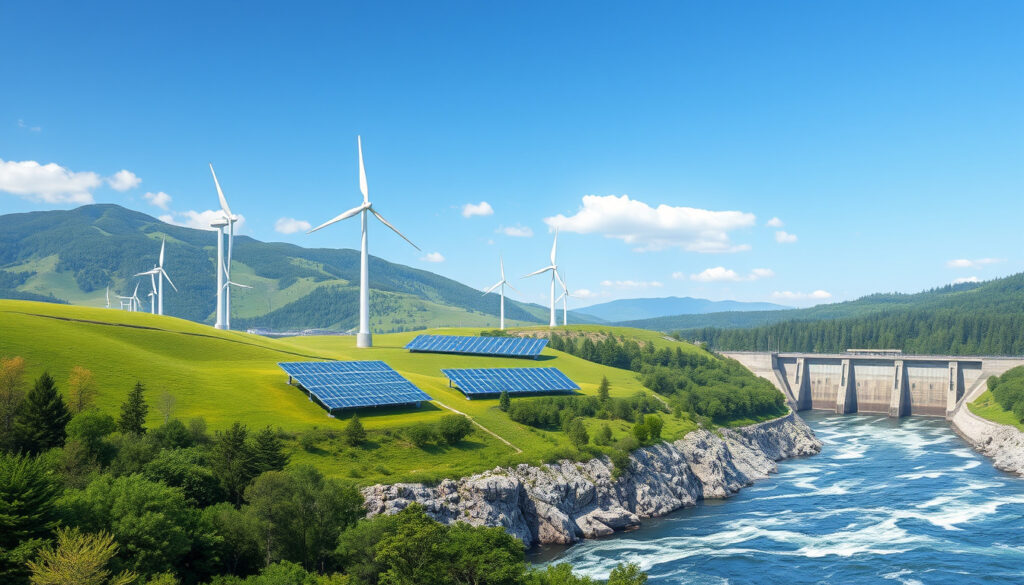
What Is Renewable Energy – Definition, Types, Benefits
Renewable energy represents one of the most significant shifts in how humanity powers its civilization. Unlike energy derived from fossil fuels, which exist in finite quantities and regenerate over millions of years, renewable sources draw from natural processes that replenish themselves on human timescales. This fundamental distinction shapes not only how electricity gets generated but also how nations approach energy security, environmental stewardship, and economic development in the twenty-first century.
The growing global emphasis on decarbonization has elevated renewable energy from an alternative option to a central pillar of modern energy policy. From residential rooftops adorned with solar panels to massive offshore wind installations stretching across horizons, clean energy technologies have achieved unprecedented scale and efficiency. Understanding what constitutes renewable energy, how it functions, and why it matters requires examining both its technical foundations and its broader implications for society.
What Is Renewable Energy?
Renewable energy is power derived from natural sources that regenerate at a rate comparable to or faster than their consumption. These sources include sunlight, wind, moving water, organic plant matter, and heat stored beneath Earth’s surface. Unlike coal, oil, or natural gas, which accumulate over geological timescales and become depleted through use, renewable resources continuously replenish themselves through natural cycles.
Energy from sources that naturally replenish within a human lifetime, including sunlight, wind, water, biomass, and geothermal heat.
Solar, wind, hydropower, geothermal, and biomass constitute the five primary categories of renewable energy.
Near-zero operational emissions, sustainable long-term supply, reduced air pollution, and decreasing dependence on foreign fuels.
Finite fossil fuels emit high carbon dioxide during combustion; renewables produce minimal emissions during operation.
The distinction between renewable and non-renewable energy carries profound practical implications. While non-renewable sources like coal and natural gas provide reliable baseload power, their combustion releases carbon dioxide and other pollutants that contribute to atmospheric warming. Renewable technologies, by contrast, generate electricity through mechanical or physical processes that leave no fuel residue and produce no direct emissions at the point of generation.
Key Characteristics of Renewable Energy
- Sources regenerate naturally within timeframes measured in days, seasons, or years rather than millennia
- Operational emissions remain near-zero for solar, wind, and hydropower (biomass produces some combustion byproducts)
- Availability varies with weather patterns, seasons, and geographic location
- Energy storage remains a technical challenge, though battery technology continues advancing
- Upfront installation costs tend to be higher, while long-term operating expenses remain lower
- Decentralized generation allows for on-site production without exclusive grid dependence
| Factor | Renewable Energy | Non-Renewable Energy |
|---|---|---|
| Availability | Unlimited, replenishes naturally | Finite, depletes with use |
| Emissions | Near-zero operational emissions | High CO₂ and pollutant emissions |
| Cost Structure | High upfront, low operating costs | Low upfront, rising long-term costs |
| Reliability | Weather-dependent intermittency | Constant baseload capability |
| Home Use | On-site generation and storage possible | Primarily grid-dependent |
| Examples | Solar, wind, hydro, geothermal | Coal, oil, natural gas, nuclear |
What Are the Main Types of Renewable Energy?
Five principal categories define the renewable energy landscape: solar power, wind power, hydropower, geothermal energy, and biomass. Each technology harnesses distinct natural phenomena to generate electricity or thermal energy, with varying degrees of maturity, efficiency, and geographic suitability.
Solar Power
Solar energy conversion occurs through photovoltaic cells that directly transform sunlight into electrical current. When photons strike semiconductor materials within these cells, they dislodge electrons, creating a flow of electricity. This direct conversion process requires no moving parts in residential installations, contributing to minimal maintenance needs. Utility-scale solar farms aggregate thousands of panels across large land areas, while rooftop installations allow individual homeowners to generate power on-site.
Solar power generation depends on sunlight intensity and duration, peaking during clear days and diminishing after sunset. This intermittency necessitates energy storage solutions or complementary generation sources for round-the-clock supply.
Wind Power
Wind turbines capture the kinetic energy of moving air masses and convert it into rotational mechanical power. The spinning blades drive generators that produce electricity without combustion or emissions. Wind farms range from onshore installations in rural plains and coastal regions to offshore developments positioned in shallow continental shelf waters where wind resources prove consistently stronger.
Hydropower
Hydropower exploits the energy of flowing or falling water to spin turbines connected to generators. Large-scale installations typically involve damming rivers to create reservoirs, controlling water flow through penstocks to maximize generation flexibility. Run-of-river projects generate power with minimal reservoir storage, while tidal installations harness the predictable rise and fall of ocean waters.
Geothermal Energy
Geothermal systems draw heat from underground reservoirs formed by radioactive decay within Earth’s crust and residual thermal energy from planetary formation. These resources prove most accessible in geologically active regions where magma chambers lie relatively close to the surface. Steam or hot water extracted from underground formations drives turbines directly, eliminating the need for fuel combustion in some installations.
Biomass
Biomass energy derives from organic materials including agricultural residues, dedicated energy crops, forestry byproducts, and organic municipal waste. Conversion methods include direct combustion for heat, gasification to produce syngas, and anaerobic digestion to generate biogas. Unlike other renewable sources, biomass combustion does produce some carbon emissions, though the carbon released theoretically represents carbon recently sequestered from the atmosphere through plant growth.
| Type | Conversion Method | Example Installation |
|---|---|---|
| Solar | Photovoltaic cells convert sunlight to DC electricity, inverted to AC | Rooftop residential panels |
| Wind | Blades rotate generators via wind kinetic energy | Offshore wind farms |
| Hydropower | Water flow spins turbines connected to generators | Hoover Dam |
| Geothermal | Steam or hot water drives turbines from underground reservoirs | Iceland power plants |
| Biomass | Combustion or gasification of plant waste produces heat and electricity | Wood pellet boilers |
What Are the Benefits of Renewable Energy?
The advantages of transitioning toward renewable energy systems extend across environmental, economic, and geopolitical dimensions. These benefits have motivated governments worldwide to establish policy frameworks, subsidies, and mandates accelerating clean energy adoption.
Coal combustion releases approximately 2.2 pounds of carbon dioxide per kilowatt-hour generated. Solar and wind installations produce virtually zero direct emissions during operation, making them critical tools for decarbonizing electricity generation.
Environmental Benefits
Clean energy sources generate electricity without the combustion byproducts associated with fossil fuel consumption. This absence translates directly into reduced atmospheric carbon dioxide, lower emissions of sulfur dioxide and nitrogen oxides that cause respiratory problems, and decreased heavy metal contamination from coal mining and oil spills. Water quality improves when fewer pollutants enter waterways through acid rain and industrial discharge.
The sustainability dimension proves equally significant. Unlike finite fossil fuel deposits that diminish with extraction, renewable resources persist indefinitely as long as the sun continues shining, winds keep blowing, and water cycles through its atmospheric patterns. This infinite availability ensures that future generations inherit energy options rather than depleted reserves.
Economic Benefits
Although renewable energy installations require substantial initial capital investment, their operating costs remain considerably lower than fossil fuel facilities. Sunlight and wind carry no price tags, eliminating fuel expense variability that characterizes conventional power generation. This predictability benefits utilities, regulators, and consumers seeking stable electricity pricing.
The renewable energy sector has emerged as a meaningful source of employment in manufacturing, construction, maintenance, and related services. These jobs often concentrate in geographic regions distinct from traditional fossil fuel extraction areas, spreading economic opportunity more broadly.
Energy Security
Distributed renewable generation reduces dependence on imported fuels subject to global price volatility and geopolitical tensions. Nations controlling substantial renewable resources can develop energy independence regardless of underground reserves. This security dimension proves particularly compelling for countries currently dependent on foreign oil or natural gas supplies.
Reduced Waste and Pollution
Clean energy technologies produce minimal solid waste compared to nuclear power or coal ash accumulation from conventional generation. Air quality improvements translate into reduced healthcare costs, fewer sick days, and enhanced quality of life in communities previously exposed to industrial emissions.
How Does Renewable Energy Work?
Renewable energy generation converts naturally occurring physical phenomena into usable electrical power through various technological pathways. The common thread involves transforming kinetic, thermal, or photonic energy into electromagnetic force that utility grids distribute to end users.
For wind energy, atmospheric motion drives turbine blades connected to rotors spinning generators at variable speeds depending on wind intensity. Hydropower installations channel flowing or falling water through mechanical systems where water pressure turns turbine runners. Solar installations rely on semiconductor physics where light absorption releases electrons that flow through photovoltaic material as direct current. To understand how renewable energy works, you can explore auto elettriche in Italia.
Unlike fossil fuel power plants that can ramp generation up or down based on demand, many renewable sources vary with weather conditions. This intermittency creates challenges for maintaining consistent grid supply, making energy storage technologies increasingly important for system reliability.
The decentralized nature of renewable generation distinguishes it from conventional power systems. Large central stations burning fossil or nuclear fuel require extensive transmission infrastructure to deliver electricity across regions. By contrast, renewable installations can locate closer to consumption centers, reducing transmission losses and infrastructure costs while empowering individual energy producers.
Consult this how it works guide for a broader understanding of energy conversion principles in practical applications.
The Production Process Across Technologies
Solar photovoltaic systems exemplify direct energy conversion without mechanical intermediaries. Sunlight strikes semiconductor cells, exciting electrons to jump energy levels and create electrical current. This DC power passes through inverters that condition it for household appliances and grid integration. Modern panels achieve conversion efficiencies exceeding twenty percent in laboratory conditions, with commercial installations commonly operating between fifteen and twenty-two percent.
Wind energy involves a mechanical conversion chain where aerodynamic lift rotates blades, transmitting torque through drive shafts to generators producing alternating current. Modern turbines feature variable blade pitch and yaw control systems that optimize orientation relative to wind direction, maximizing energy capture while protecting equipment during high-speed gusts.
Hydropower plants utilize the potential energy of elevated water, converting gravitational energy into kinetic energy as water flows downward through turbines. The pressure and volume of water flow determine power output according to fundamental physics: power equals the product of flow rate, gravitational acceleration, and height differential.
The Evolution of Renewable Energy
The development of renewable energy technologies spans several distinct eras, each characterized by different economic drivers, technological capabilities, and policy frameworks.
Milestones in Renewable Energy Development
- 1970s Oil Crisis: The OPEC oil embargo exposed vulnerabilities in petroleum-dependent economies, prompting governments to explore energy alternatives and fund early research into solar, wind, and other renewable technologies.
- 1980s Early Commercialization: Initial wind farms began operating in California following tax incentives, while photovoltaic systems started appearing in remote applications where grid extension proved prohibitively expensive.
- 1990s Policy Foundation: Environmental awareness grew alongside early emissions trading programs and renewable portfolio standards that mandated clean energy percentages in utility supply portfolios.
- 2000s Solar Expansion: Manufacturing scale and technological improvements drove down solar panel costs dramatically, enabling grid-parity installations in sunnier regions.
- 2010s Offshore Wind: Turbine sizes increased substantially, with offshore installations reaching capacities unthinkable in earlier decades, opening new frontiers for wind energy development.
- 2020s Net-Zero Commitments: Climate pledges from major economies accelerated investment timelines, with solar and wind emerging as the fastest-growing electricity generation sources globally.
- 2025 and Beyond: Continued cost declines, improved storage solutions, and policy support position renewables to become the dominant electricity source in many markets.
See this visual guide for additional context on technological evolution across energy sectors.
What We Know and What Remains Uncertain
A clear distinction exists between established facts about renewable energy and areas where ongoing research, technological development, or policy evolution continues to shape understanding.
| Established Information | Areas of Uncertainty |
|---|---|
|
|
Why Renewable Energy Matters
The significance of renewable energy extends far beyond its technical characteristics or economic metrics. It represents a fundamental reconceptualization of humanity’s relationship with planetary resources, shifting from extraction-based consumption toward sustainable participation in natural energy flows.
Growing global energy demand creates pressure that finite fossil fuel supplies cannot indefinitely satisfy. As conventional reserves deplete, extraction costs tend to increase, creating economic incentives for alternatives even absent environmental concerns. Renewable technologies offer pathways to meet expanding energy needs while preserving ecological systems that sustain life.
Climate change mitigation depends critically on decarbonizing electricity generation, which currently accounts for substantial global carbon emissions. Renewable energy provides the primary mechanism for achieving this transformation, with solar and wind installations expanding rapidly in response to both climate imperatives and their inherent economic advantages.
Expert Perspectives on Renewable Energy
International energy agencies and environmental organizations have articulated compelling rationales for accelerating renewable energy adoption.
The rapid decline in costs for solar and wind power means renewables are increasingly the cheapest source of new electricity generation in many parts of the world.
— International Energy Agency analysis on renewable energy economics
Renewable energy is essential to reducing carbon pollution and addressing the climate crisis. Investing in clean energy creates jobs and strengthens American energy security.
— U.S. Department of Energy perspective on renewable energy policy
These perspectives reflect broad scientific consensus that renewable energy technologies offer proven pathways toward sustainable development. The convergence of environmental necessity, economic opportunity, and energy security considerations has elevated clean energy from a niche alternative to mainstream energy policy priority.
The Bottom Line on Renewable Energy
Renewable energy encompasses power generated from naturally replenishing sources including sunlight, wind, moving water, biomass, and Earth’s internal heat. Unlike finite fossil fuels, these resources sustain availability across human timescales, offering a pathway toward meeting growing global energy demand while reducing environmental impacts. The five primary types—solar, wind, hydropower, geothermal, and biomass—each employ distinct technologies to convert natural phenomena into usable electricity, with varying advantages suited to different geographic and climatic conditions.
The benefits of renewable energy span environmental improvements through reduced emissions, economic advantages through stable long-term operating costs, and geopolitical security through decreased import dependence. Despite challenges including upfront capital requirements, weather-dependent intermittency, and storage limitations, technological advancement and policy support continue expanding renewable energy’s role in global electricity generation.
Frequently Asked Questions
What are disadvantages of renewable energy?
Renewable energy technologies typically require substantial upfront installation costs despite lower operating expenses. Intermittency presents challenges since solar generation peaks during daylight hours while wind output varies with weather patterns. Geographic limitations affect feasibility, as regions with limited sunlight or wind require alternative approaches. Battery storage remains expensive, and some renewable sources like biomass produce combustion byproducts.
Is wind energy renewable?
Yes, wind energy qualifies as renewable because wind results from atmospheric circulation driven by solar heating, a continuous natural process that will persist indefinitely. Wind turbines capture kinetic energy without depleting the resource, making it sustainable across human timescales.
Is solar energy renewable?
Solar energy qualifies as renewable because sunlight reaches Earth continuously and will continue doing so for approximately five billion more years. Photovoltaic technology converts this light into electricity without consuming the sun itself, making solar power sustainable regardless of human usage patterns.
How is renewable energy produced?
Renewable energy production involves converting natural energy flows into electricity through various technologies. Solar panels use photovoltaic cells, wind turbines employ generators driven by rotating blades, hydropower channels flowing water through turbines, geothermal systems tap underground heat, and biomass burns organic materials or converts them through gasification processes.
Why is renewable energy important?
Renewable energy matters because it offers sustainable electricity generation that reduces carbon emissions, improves air quality, diminishes dependence on finite fossil fuels, and creates economic opportunities through new industries and jobs. It addresses climate change imperatives while providing energy security benefits.
What is the difference between renewable and non-renewable energy?
Renewable energy sources like sunlight, wind, and water regenerate naturally within human timescales, while non-renewable sources such as coal, oil, and natural gas exist in finite quantities requiring millions of years to form. Renewables produce minimal emissions during operation; non-renewables release carbon dioxide and pollutants when burned.
What are the main sources of renewable energy?
The five primary renewable energy sources are solar (sunlight converted via photovoltaic cells), wind (kinetic energy captured by turbines), hydropower (flowing water turning generators), geothermal (heat from beneath Earth’s surface), and biomass (energy from organic materials through combustion or processing).
More related posts
 Ford Mustang Mach-E: 2026 Review, Price, and Buying Guide
 Demon Slayer Infinity Castle Movie Release Date: 2025, 2027, 2029
 Matthew Lillard Movies and TV Shows: Filmography & Career
 I Pedro Pa cal Married? Relation hip Timeline & Fact 2025
 2023 Tesla Model 3: Price, Specs, Trims & Is It Worth Buying
 Los Angeles Rams vs Philadelphia Eagles Match Player Stats
 Weeds (TV Series): Cancellation, Reboot & Streaming
 YouTube MP3 Download Converter: Best Free Tools Compared
