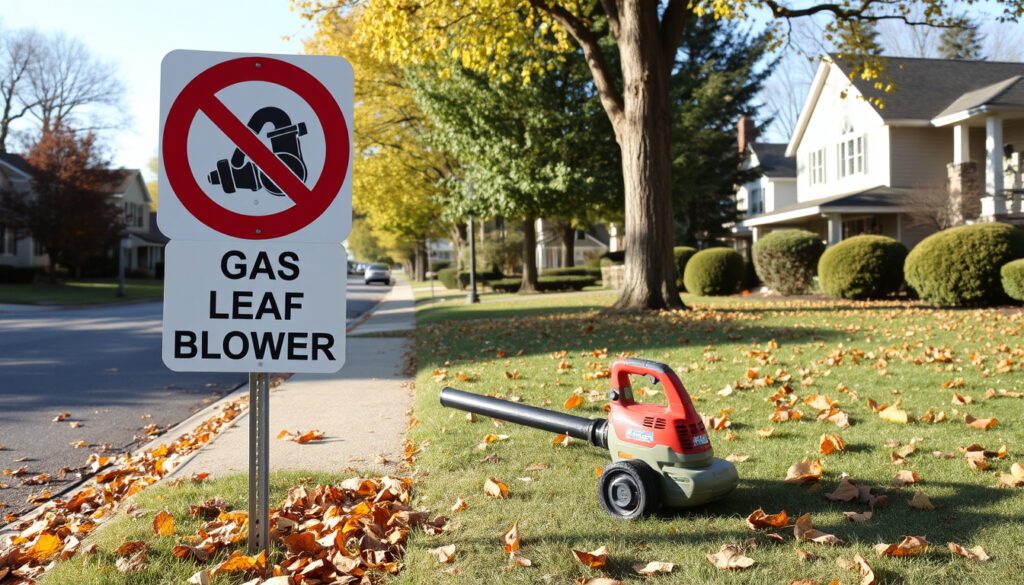
Arlington Gas Leaf Blower Ban Effective March 2026
If you live in Arlington, Massachusetts, the familiar roar of gas leaf blowers will soon be a thing of the past. Starting March 15, 2026, a new bylaw bans all gas-powered leaf blowers in town, joining neighboring Lexington in a growing movement.
Arlington, MA ban effective date: March 15, 2026 ·
Massachusetts towns with bans: 2 (Arlington and Lexington) ·
Florida gas leaf blower ban status: Prohibited by state law ·
California new gas leaf blower sales: Banned as of 2024
Quick snapshot
- Arlington ban effective March 15, 2026 (Arlington, MA town government)
- Lexington ban in effect (ARLnow)
- Florida preemption law prevents local bans (Florida Today)
- Exact penalties for violating the Arlington ban (Quiet Healthy Arlington)
- Whether exemptions exist for disabled residents (ARLnow)
- Total number of US cities with bans (Audubon)
- California bans sale of new gas leaf blowers — 2024 (Audubon)
- Commercial landscaper ban in Arlington — March 15, 2025 (Quiet Healthy Arlington)
- Resident ban takes effect — March 15, 2026 (Arlington, MA town government)
- Arlington County, VA considering year-round ban (Arlington County, Virginia)
- Alexandria, VA full ban takes effect Nov 17, 2026 (ALXnow)
- Montgomery County, MD enforcement lessons (ARLnow)
The key facts about the ban are summarized below.
| Fact | Detail |
|---|---|
| Ban effective date | March 15, 2026 |
| Jurisdiction | Arlington, Massachusetts |
| Scope | All gas leaf blowers, commercial and residential |
| Similar ban nearby | Lexington, Massachusetts |
| Florida policy | State preemption prevents local bans |
| California policy | Sale of new gas leaf blowers banned since 2024 |
Why are cities banning gas leaf blowers?
Gas leaf blowers have become a target for local noise and air quality ordinances across the United States. The reasons are well-documented and backed by data from health and environmental groups.
Noise pollution and decibel levels
- A typical gas leaf blower produces noise levels around 100 decibels at full throttle, loud enough to cause permanent hearing damage with prolonged exposure (Audubon).
- For comparison, that’s as loud as a chainsaw or a motorcycle. The sound carries far beyond property lines, disrupting neighborhoods and wildlife.
Air pollution and emissions
- Gas leaf blowers emit carbon monoxide, volatile organic compounds (VOCs), and fine particulate matter. A single gas leaf blower operated for one hour can emit as much smog-forming pollution as driving a new car for hundreds of miles (Audubon).
- These emissions contribute to local air quality problems and climate change, prompting cities to push for electric alternatives.
Health concerns for operators and neighbors
- Landscape workers who use gas leaf blowers daily are at elevated risk for respiratory issues, hearing loss, and vibration-related injuries (Quiet Healthy Arlington).
- Bystanders, including children and elderly residents, also inhale the exhaust, which is why many advocates support bans on private property use.
Quieter, zero-emission electric leaf blowers already perform comparably for most residential tasks. The shift leaves landscaping companies facing equipment upgrade costs — but many municipal rebate programs can offset the expense.
These concerns have pushed cities to act, despite opposition from some landscaping companies and homeowners.
How many cities in the US have banned leaf blowers?
Dozens of municipalities have enacted restrictions, but no centralized count exists. The pattern: coastal and progressive jurisdictions lead, while several states preempt local control.
Notable municipal bans
- Arlington, MA and Lexington, MA both passed bans in 2025–2026 (ARLnow).
- Washington, D.C., Montgomery County, MD, and Alexandria, VA have also restricted or banned gas leaf blowers (Arlington County, Virginia).
- California’s state ban on new gas leaf blower sales took effect in 2024, affecting retailers statewide (Audubon).
State-level restrictions in California
- California’s Air Resources Board (CARB) phased out the sale of new gas-powered leaf blowers and other small off-road engines starting January 1, 2024 (Audubon).
- Existing gas blowers can still be used, but eventually supply will dwindle as replacements are electric only.
Preemption laws in Florida
- Florida state law explicitly prohibits local governments from banning gas leaf blowers (Florida Today).
- This means cities like Miami or Orlando cannot follow the Massachusetts model, even if their residents want noise restrictions.
The contrast between California (state-level ban) and Florida (state-level preemption) shows that the battle over leaf blower restrictions is now as much about state power as about local environmental choices.
What this means: the ability to impose bans depends heavily on state legislative dynamics, not just local will.
Why did Lexington ban gas leaf blowers?
Lexington, Massachusetts passed a ban similar to Arlington’s in 2025, creating the first pair of neighboring towns in the state to go all-gas-free.
Lexington’s ban timeline
- Lexington’s Town Meeting approved the ban in 2025, with a phase-in period mirroring Arlington’s commercial-first schedule (ARLnow).
- The ban applies to all gas leaf blowers on public and private property, with limited seasonal exceptions still under discussion.
Comparison to Arlington’s ban
- Both towns prohibit all uses of gas leaf blowers by residents and commercial landscapers after their respective phase-in deadlines.
- Arlington’s first-offense fine is $100, second-offense $200 (Quiet Healthy Arlington). Lexington’s penalties are similar, though exact numbers were still being finalized during early enforcement planning.
The pattern among Massachusetts towns is clear: adjacent cities are coordinating to avoid a patchwork of rules.
| Jurisdiction | Ban effective date | Covers residents? | Fines |
|---|---|---|---|
| Arlington, MA | March 15, 2026 | Yes | $100–200 |
| Lexington, MA | 2025 (phased) | Yes | Under review |
| California (sale ban) | January 1, 2024 | No (use allowed) | Retail penalties |
| Alexandria, VA | November 17, 2026 | Yes | Citation |
Four jurisdictions, one pattern: local bans are spreading rapidly, though state laws in Florida and Texas prevent similar moves.
Are gas-powered leaf blowers illegal in Florida?
No — and they likely won’t be anytime soon. Florida’s state law preempts local ordinances on leaf blower noise, meaning cities cannot pass their own bans.
Florida’s preemption law
- Florida Statute 365.172 prohibits local governments from regulating the sound levels of lawn care equipment (Florida Today).
- This law was pushed by landscaping industry groups who argued that a patchwork of local rules would hurt small businesses.
How it affects local ordinances
- Even if a city like Gainesville or Tampa wanted to follow Arlington’s lead, the state law overrides any local noise ordinance that targets leaf blowers.
- Residents in Florida who want quieter neighborhoods must lobby the state legislature — a much harder task than convincing a town council.
Florida’s preemption creates a stark disparity: while Massachusetts towns enjoy local control, Florida communities are stuck with gas leaf blowers unless the state reverses course.
The implication: residents in preemption states must redirect efforts toward state‐level reform, not local ordinances.
When does the Arlington gas leaf blower ban take effect?
The ban is already in partial effect for commercial users. The final piece — applying to all residents — arrives on March 15, 2026.
Phase-out schedule
- Phase 1 (seasonal ban): March 15, 2023 – initial summer restriction on gas blowers (Quiet Healthy Arlington).
- Phase 2 (commercial ban): March 15, 2025 – all gas leaf blowers prohibited for commercial landscapers.
- Phase 3 (resident ban): March 15, 2026 – all gas leaf blowers prohibited for residents on private property.
Who is affected: residents vs commercial
- The ban applies to anyone operating a gas-powered leaf blower within Arlington town limits — homeowners, tenants, landscaping companies, and even property managers (ARLnow).
- Electric leaf blowers remain permitted, subject to daytime hours restrictions.
Confirmed facts
- Arlington ban effective March 15, 2026 (Arlington, MA town government)
- Lexington ban in effect (ARLnow)
- Florida preemption prevents local bans (Florida Today)
- California sales ban from 2024 (Audubon)
- Arlington fines: $100 first, $200 second (Quiet Healthy Arlington)
What’s unclear
- Exact penalties for violations (some details not yet public)
- Whether exemptions exist for disabled residents or medical necessities
- Total number of US cities with bans (no official tally)
- How enforcement will work in practice (code complaints vs proactive patrols)
“Gas-powered leaf blowers are prohibited for use by anyone, including residents on their own private property.”
— Arlington Town Manager Jim Feeney, as quoted by ARLnow
“Jurisdictions across the country have begun banning gas-powered leaf blowers, including neighboring D.C., Montgomery County, and most recently Alexandria City.”
— EcoAction Arlington
With the March 2026 deadline approaching, Arlington residents have a clear choice: invest in an electric leaf blower now, or risk a fine later. For landscaping companies in nearby towns, the Arlington model signals a trend that’s likely to spread. For Massachusetts as a whole, the pattern is unmistakable — local control over noise and air quality is winning, one town at a time.
Frequently asked questions
Can I use a gas leaf blower in Arlington after March 15, 2026?
No. As of that date, all gas-powered leaf blowers are prohibited on public and private property in Arlington, Massachusetts (Arlington, MA town government).
What are the penalties for violating the ban?
First offense: $100 fine; subsequent offenses: $200 fine (Quiet Healthy Arlington).
Are electric leaf blowers allowed?
Yes, electric leaf blowers are permitted, subject to daytime hours restrictions. The ban applies only to gas-powered equipment.
Does the ban affect landscaping companies?
Yes. Commercial landscapers were already prohibited from using gas leaf blowers in Arlington as of March 15, 2025 (Quiet Healthy Arlington).
How is the ban enforced?
Enforcement is handled through the town’s code compliance department. Residents can report violations, and fines are issued after warnings. The town manager has confirmed the prohibition applies to everyone.
What should I do with my old gas leaf blower?
Residents may sell or donate used gas blowers, but after March 15, 2026, operating them in Arlington will violate the bylaw. Many towns host hazardous waste drop-off events for gasoline-powered equipment.
More related posts
 2023 Tesla Model 3: Price, Specs, Trims & Is It Worth Buying
 Hughes Federal Credit Union: Phone, Address, Auto Loan & More
 New Bad Boys Movie: Ride or Die Updates, Streaming & Future
 Northern Lights Aurora Borealis 2026: Forecast & Best Viewing
 Red Light Therapy Before and After: Results Timeline & Key Changes
 Swiss Franc to USD – Live Rate Converter and Guide
 The Life of a Showgirl: Controver y, Critic & Earning
 Redmi 4 Prime to Buy: Price, Specs & Review (2025 Guide)
