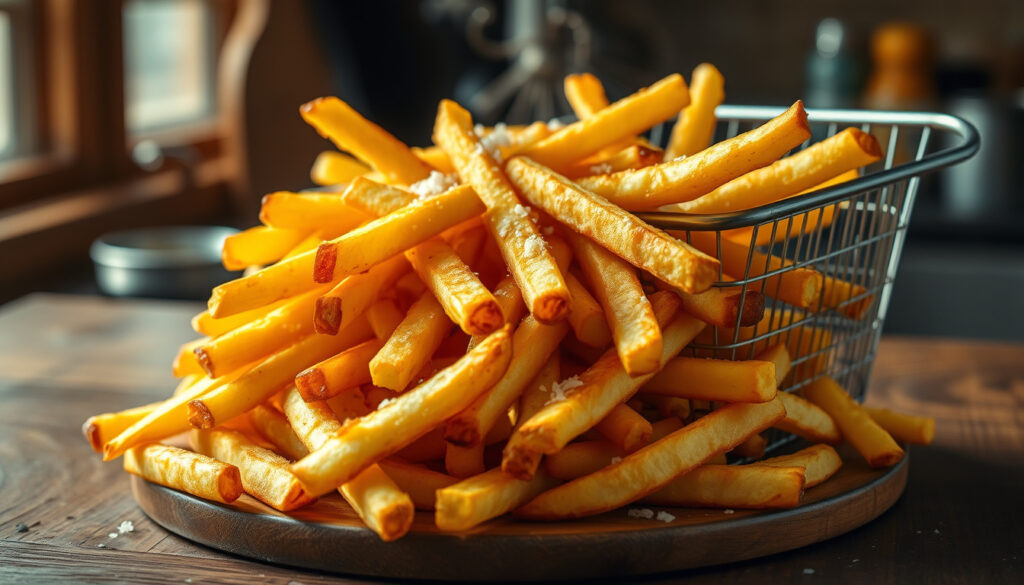
Air Fryer French Fries: Perfect Crispy Recipe Guide
Your air fryer makes crispy fries with a fraction of the oil deep frying requires. These machines circulate hot air at high speed, which means you can get that golden crunch without submerging food in a vat of grease. Below, the best techniques from tested recipes—plus the trade-offs worth knowing before you start slicing.
Typical Cooking Time: 15-20 minutes · Common Temperature: 380°F · Oil Needed: 1 tablespoon · Calories per Serving: Lower than deep-fried · Crispy Results: Matches deep-fried
Quick snapshot
- Cut potatoes evenly, toss in 1 tbsp oil, 380°F 15-20 min (Beautiful Ingredient)
- No oil needed, 200°C 10 min, shake halfway (Holy Cow! Vegan Recipes)
- Less oil than deep-fry, crispy texture, lower calories (EatPlant-Based)
- Avoid wet fries, don’t skip preheat, don’t overcrowd basket (Karissa’s Vegan Kitchen)
| Parameter | Value |
|---|---|
| Standard Temp | 380°F |
| Cook Time | 15-20 minutes |
| Oil Amount | 1 tablespoon |
| Frozen Time | 10 minutes at 200°C |
How long do you cook french fries in the air fryer?
Most fresh-cut recipes land in the 15-20 minute range at 400°F. Some methods start at 350°F to gently cook the interior before cranking up the heat for browning, while others go full temperature from the beginning. The spread exists because fry thickness and air fryer models vary.
Fresh vs frozen fries
Fresh-cut fries need that full 15-20 minutes because the raw potato interior takes longer to cook through. Frozen fries are parcooked already, so they only need reheating and crisping—typically 10 minutes at 200°C. Cooking times vary by potato thickness, quantity, and air fryer model, so starting with a visual check around the 12-minute mark helps avoid overdoing them.
Shaking halfway through
Shaking or tossing the basket midway ensures all sides get direct hot air exposure. Recipes from Karissa’s Vegan Kitchen call for tossing every 5-10 minutes; Holy Cow! Vegan Recipes specifies every 5 minutes to prevent uneven patches. Skipping this step is the single most common reason fries come out spotty rather than uniformly golden.
What’s the best temperature to cook french fries in an air fryer?
The consensus across tested recipes lands on 400°F (approximately 200°C) for most fresh-cut fries. This high heat creates the Maillard reaction fast enough to develop color and crunch before the interior turns mushy. Some cooks drop to 350°F for thicker cuts to avoid burning the outside before the inside is done, then finish at 400°F for the last few minutes.
380°F for fresh
Several recipe developers, including Karissa’s Vegan Kitchen, note that 380°F produces consistent results without the slight burning risk some users report at 400°F with thinner fries. The 20°F difference is marginal but matters more for thinner cuts where the surface-to-interior ratio is higher.
200°C for frozen
Frozen fries cook best at 200°C because they’ve already been blanched during industrial processing. Running them at a lower temperature than fresh cuts prevents the exterior from over-browning before the interior reaches serving temperature. Holy Cow! Vegan Recipes specifies 5 minutes, toss, then 5 more—totaling 10 minutes at this setting.
How do I make the best french fries in an air fryer?
Achieving restaurant-quality results at home comes down to three pillars: even cutting, proper moisture removal, and just enough fat to aid browning. The oil requirement is modest—roughly 1 tablespoon for a standard batch is enough to coat the surface and trigger the Maillard reaction without the greasy feel of deep frying.
Cut evenly
A mandoline with a hand guard produces uniform strips that cook at the same rate, which is critical when you’re not using a deep fryer’s even heat distribution. Uneven cuts mean some pieces turn brown while others remain pale. Beautiful Ingredient recommends a mandoline specifically for this reason.
Minimal oil toss
Russet or Yukon potatoes are preferred for fluffy inside and crunchy outside in oil-free air fryer fries, according to EatPlant-Based. Tossing 1 tablespoon of oil with the cut fries in a bowl before loading the basket gives just enough surface coverage for proper browning. For an oil-free variation, some cooks report acceptable results using a silicone mat to prevent sticking, though Beautiful Ingredient notes that oil-free versions brown nicely but lack full crispy crunch compared to the lightly oiled version.
What are some common mistakes when air frying fries?
Most home cooks encounter the same handful of issues. The good news: they’re all avoidable with awareness and small adjustments to technique. These errors typically fall into three categories: moisture-related, spacing-related, and timing-related.
Overcrowding basket
Piling fries too tightly blocks airflow, which means the hot air never reaches the interior pieces. The result is soggy, undercooked patches hidden under a layer of browned exteriors. For a standard 5.5-quart air fryer like the Ninja model, EatPlant-Based suggests loading 4-5 medium potatoes in a single layer if possible, or cooking in batches if you want consistent crunch.
No shaking
Even when placed in a single layer, fries naturally stack at angles that shield parts from direct air circulation. Shaking redistributes the pieces so every strip gets equal exposure. Skipping this step is the single most common reason fries come out spotty rather than uniformly golden.
Oil-free air fryer French fries are so delicious because they come out perfectly crispy and golden without the extra grease, but you’ll trade some crunch compared to a lightly oiled batch. The catch: if you’ve been craving that deep-fry snap, a tiny amount of oil restores it.
How to make frozen french fries in air fryer?
Frozen fries are the weeknight shortcut that actually works. The industrial blanching they undergo during manufacturing means they’re already partially cooked, so your air fryer just needs to finish the job and re-crisp the exterior. No thawing required—in fact, thawing introduces moisture that leads to soggy results.
No thawing needed
Going straight from freezer to basket is the recommended approach. Frozen water crystals on the surface flash into steam during cooking, which helps lift moisture and creates that initial sizzle. Holy Cow! Vegan Recipes confirms the 10-minute protocol works without any intermediate thaw step.
200°C for 10 minutes
Set the air fryer to 200°C and cook for 5 minutes, then toss or shake the basket, then cook for 5 more minutes. This two-step process ensures even crisping on all surfaces. The shake midway is non-negotiable here too—frozen fries stick together even more than fresh cuts.
Air fryer circulates hot air at high speed to produce crispy foods without oil, reducing calories and fat compared to deep frying. For anyone monitoring fat intake, this matters: a tablespoon of oil goes further in an air fryer than in a pan, and some recipes skip oil entirely for an even leaner result.
Step-by-step: Fresh-cut air fryer fries
Three tiers of home cooks—those who want minimal effort, those who want restaurant quality, and those with dietary restrictions—need slightly different approaches. Below is the tested baseline that works across most scenarios, followed by adjustments for each goal.
Step 1 — Choose your potato. Russet potatoes deliver the starchy fluff interior that most people associate with good fries. Yukon Golds work too, though the result is slightly denser. Peel if you prefer skin-free; leave skin on for a more rustic texture.
Step 2 — Cut evenly. Aim for strips roughly ¼ to ½ inch thick. Thinner cuts crisp faster but have less fluffy interior; thicker cuts reverse that trade-off. Use a sharp knife or mandoline for consistency. Beautiful Ingredient specifically recommends a mandoline with a hand guard for uniform results.
Step 3 — Soak to remove starch. Submerge cut potatoes in cold water for 15-30 minutes. This step rinses surface starch, which otherwise browns unevenly and can make fries stick together. Some cooks extend soaking to an hour for extra crispiness; others add a tablespoon of white vinegar to the water for a slightly more pronounced crust.
Step 4 — Dry thoroughly. Drain and pat completely dry with paper towels. Moisture is the enemy of crispiness—any water remaining on the surface steams rather than browns. Holy Cow! Vegan Recipes emphasizes this step specifically.
Step 5 — Toss with a small amount of oil. Add 1 tablespoon of oil to the bowl with the dried fries and toss until lightly coated. This is far less than deep frying but enough to achieve proper browning. For oil-free, skip the oil and use a silicone mat in the basket.
Step 6 — Season (optional but recommended). Sprinkle seasonings on damp freshly-cut potatoes to help them stick without oil, per EatPlant-Based. Classic options: salt, pepper, garlic powder, onion powder, smoked paprika. Be conservative—the air fryer intensifies flavors.
Step 7 — Preheat and load. Set the air fryer to 400°F and let it run empty for 2-3 minutes. Load the fries in a single layer for best airflow. If your model is small, cook in two batches rather than stacking.
Step 8 — Cook with midway shake. Set a timer for 8-10 minutes, then open and shake the basket. Repeat for another 7-10 minutes until the fries reach your desired color. Thicker cuts may need the full 20 minutes; thinner cuts are often done at 15.
Step 9 — Serve immediately. Fries lose crispiness fast as they cool. Air Fryer French Fries in 18 Minutes recommends serving right away with dipping sauces for best texture. Rest a minute if needed, but not longer.
Confirmed facts vs. what’s still unclear
Across the sources reviewed, cooking parameters are well-established. Nutritional specifics remain less certain because serving sizes and potato varieties introduce variation.
Confirmed facts
- 400°F is the consensus temperature for fresh-cut fries
- 15-20 minutes total cook time for fresh fries
- 10 minutes at 200°C for frozen fries
- Shaking midway improves texture
- Russet and Yukon Gold produce the best interior-exterior balance
- 1 tablespoon of oil is sufficient for coating
What’s unclear
- Exact calorie reduction per serving varies by potato size and cut thickness
- Long-term storage tips for cooked oil-free fries are not well-documented
- Head-to-head performance tests between specific air fryer models
What the experts say
Crispy, golden, and absolutely perfect—these Air Fryer Fries are amazing. No deep frying, no excess oil, just the crunchiest fries in minutes.
— Chef Stu, Air Fryer French Fries in 18 Minutes
Oil-free air fryer French fries are so delicious because they come out perfectly crispy and golden without the extra grease.
— Recipe Developer, EatPlant-Based
The fries made without oil are tasty enough, and they brown nicely in the air fryer, but you won’t quite get that crispy crunch you get with the small amount of oil.
— Vegan Chef, Holy Cow! Vegan Recipes
The two-stage cooking method (first at 350°F then 400°F) reportedly produces a fluffy interior with crispy exterior, according to some video demonstrations. However, this technique is not as widely documented in written recipes, so results may vary depending on your air fryer model and fry thickness.
Summary
Air fryer french fries occupy a sweet spot: they deliver the texture most people associate with comfort food while requiring dramatically less oil than traditional deep frying. The evidence supports 400°F and 15-20 minutes for fresh cuts, 200°C and 10 minutes for frozen, with one non-negotiable step—shaking midway. Russet potatoes give the fluffiest interior, and a tablespoon of oil is plenty for proper browning. For those watching calories or fat, oil-free versions are viable, though they trade a degree of crunch for leanness. The air fryer eliminates the fire hazard and odor of deep frying without sacrificing the end result—when you follow the basics. Home cooks who preheat, cut evenly, and shake the basket consistently get crispy fries without a vat of oil.
Related reading: Oil-free Air Fryer French Fries · Oil-Free Air Fryer French Fries
Home cooks often achieve perfect crunch in just 15-20 minutes using the efficient method outlined in this 15-20 minute crispy recipe, ideal alongside your favorite dips.
Frequently asked questions
Is air frying ok for diabetics?
Air frying reduces the oil absorbed into food compared to deep frying, which can help manage fat intake—a consideration for blood sugar control. However, the potato itself still contains carbohydrates, so portion size matters. Consult a healthcare provider for personalized dietary guidance.
Air fryer french fries—is it healthy?
Air fried fries are lower in fat and calories than deep-fried equivalents because the food doesn’t absorb oil during cooking. A tablespoon of oil for a batch of fries is significantly less than the amount used in traditional frying. Healthiness depends on frequency, portion size, and what you serve alongside the fries.
Can I make air fryer french fries with no oil?
Yes. Oil-free versions work using the air fryer’s hot air circulation alone. Results brown nicely but may lack the full crunch of lightly oiled batches. Using a silicone mat prevents sticking when skipping the oil entirely.
How many calories are in air fryer french fries?
Exact calorie counts vary by potato size, cut thickness, and oil amount used. A rough estimate for a tablespoon of oil with a medium potato yields roughly 150-200 calories per serving, compared to 300+ for deep-fried portions of similar size. Oil-free versions run lower.
Ninja air fryer french fries—any special settings?
Ninja air fryers with 5.5-quart capacity can hold 4-5 medium potatoes. Standard 400°F for 15-20 minutes works well. The larger basket means you can cook more fries at once, though overcrowding reduces crispiness.
Crispy air fryer french fries—why are mine soft?
Soft fries usually result from one of three issues: overcrowding (blocks airflow), skipping the midway shake (uneven exposure), or excess moisture (insufficient drying after soaking). Correcting these typically solves the problem.
More related posts
 CVS Pharmacy Near Me: Find Hours, Discounts & Services
 Usyk vs Dubois 2 – Results, Highlights and Analysis
 Oklahoma City Thunder vs Pacers: 2025 Finals Timeline
 Go Karting Near Me: Indoor & Outdoor Tracks in Ireland
 Bath and Body Works Coupon Guide: Policy, Codes, and Savings
 Dodgers vs Toronto Blue Jays Game 7 Player Stats: Box Score
 How to Fix Slow DNS Lookup: Windows, Mac, Router Fixes
 How Tall is Timothée Chalamet? 5’10” (178 cm) Facts
