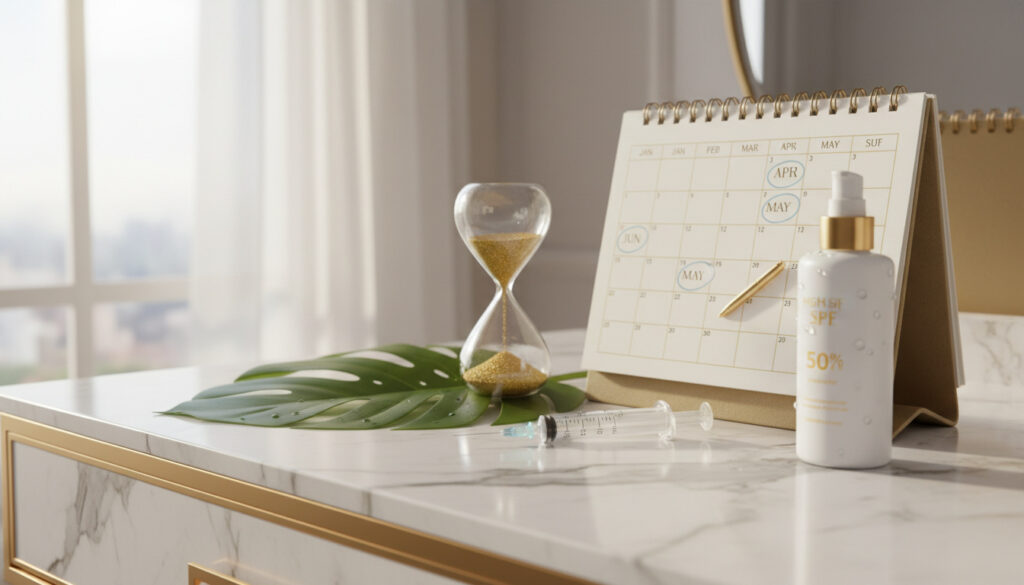
How Long Does Lip Filler Last – Duration, Factors and Tips
Hyaluronic acid lip fillers typically maintain visible volume for six to twelve months, though individual experiences range from three to eighteen months depending on specific product formulations and physiological factors. The aesthetic industry relies on these temporary enhancements because the lips represent a high-mobility facial zone where constant muscle activity accelerates product metabolism compared to static areas like the cheeks or temples.
Patients seeking augmentation should understand that initial swelling masks true results for approximately fourteen days, after which the stabilized outcome gradually degrades through natural enzymatic processes. Clinical tracking shows that while satisfaction rates peak at ninety-one percent two months post-injection, they decline to seventy-four percent by the six-month mark as volume dissipates.
Repeat treatments often yield extended longevity compared to initial sessions, as residual hyaluronic acid integrates with native tissue structures.
How Long Does Lip Filler Last on Average?
- Lip tissue metabolizes filler significantly faster than less mobile facial zones due to constant muscular activity during speech and expression.
- Hyaluronic acid formulations dominate the market because they offer reversible results through enzymatic dissolution if complications arise.
- Touch-up appointments scheduled every six to nine months preserve optimal contour better than waiting for complete dissipation.
- True aesthetic results become visible only after initial edema subsides, typically requiring fourteen days.
- Thicker, more cohesive gel formulations generally persist longer than lighter viscosity alternatives.
- Subsequent treatment sessions often yield extended longevity as residual product integrates with native tissue.
- Clinical studies confirm lips retain approximately thirty-seven percent of initial volume at twelve weeks compared to seventy-nine percent in the midface.
| Filler Type | Average Duration | Clinical Notes |
|---|---|---|
| HA (Juvederm, Restylane) | 6-12 months | Most popular; reversible with hyaluronidase |
| Collagen | 3-4 months | Firmer texture; less common today |
| CaHA (Radiesse) | 12+ months | Collagen-stimulating properties |
| PLLA (Sculptra) | Up to 2 years | Gradual volumization results |
| Fat Transfer | 2+ years | Variable survival rates; natural alternative |
| Juvederm Ultra XC | 6-12 months | Smooth, natural plumpness |
| Restylane Kysse | 6-10 months | XpresHan technology for elasticity |
| Full Effect Visible | 1-2 weeks | Post-swelling resolution |
| Peak Fullness | 2-4 months | Optimal aesthetic window |
| Complete Dissolution | 12-18 months | Natural HA metabolism |
What Factors Affect Lip Filler Duration?
How long do lip fillers last? 6 factors that impact their longevity include metabolic rate, product characteristics, injection technique, and lifestyle variables. Understanding these elements helps patients establish realistic expectations for their specific physiological profile.
Metabolic Rate Variations
Individual metabolic velocity represents the primary determinant of filler persistence. Patients with higher enzymatic activity break down hyaluronic acid polymers more rapidly, causing lips to lose volume faster than less metabolically active areas like the midface. This biological variance explains why identical products last six months in some patients and eighteen in others.
Product Characteristics and Volume
Thicker, more cohesive hyaluronic acid formulations demonstrate extended longevity compared to lighter viscosity options. Additionally, greater injection volumes generally persist longer because residual product remains even after partial metabolic breakdown. Cincinnati Facial Plastics notes that specific product selection significantly influences individual outcomes.
Injection Technique and Placement
Practitioner expertise significantly influences duration. Precise placement within appropriate anatomical planes enhances both aesthetic outcomes and product stability, while superficial or misplaced injections may degrade faster or create palpable irregularities.
Smoking, ultraviolet radiation exposure, and vigorous exercise regimens accelerate hyaluronic acid breakdown through increased metabolic demand and oxidative stress. Jacksonville cosmetic dermatology practices confirm that patients maintaining these habits typically experience filler dissipation at the shorter end of the duration spectrum.
How Long Do Popular Lip Filler Brands Last?
Juvederm Ultra XC Longevity
Allergan’s Juvederm Ultra XC specifically maintains lip augmentation for six to twelve months, delivering smooth, natural plumpness through its cross-linked hyaluronic acid gel formulation. Alaska-based plastic surgeons report this duration range across diverse patient populations. The product’s cohesive properties resist enzymatic degradation while maintaining natural movement.
Restylane Lip Fillers
Galderma’s Restylane product line shares similar longevity profiles with other hyaluronic acid fillers, typically persisting six to ten months in lip applications. New York dermatology specialists note that specific formulations like Restylane Kysse utilize XpresHan technology for enhanced elasticity and natural movement.
Both brands offer reversible results through hyaluronidase injection if patients desire early dissolution or encounter complications. Clinical observations confirm that brand selection matters less than individual metabolic factors in determining final duration.
Lip Filler Timeline: Swelling, Settling, and Wear-Off
- Day 1-3: Peak edema occurs immediately post-injection as tissue responds to trauma and hyaluronic acid hydrophilic properties. Lips appear significantly larger than final results.
- Week 1-2: Acute swelling resolves, revealing stabilized volume. True aesthetic outcomes become visible as inflammatory processes subside.
- Month 2-4: Peak fullness settles as product integrates with native tissue. Patient satisfaction reaches ninety-one percent according to clinical data.
- Month 3-6: Gradual volume loss begins as hyaluronidase enzymes break down the gel matrix. Lips retain approximately thirty-seven percent of initial volume at twelve weeks.
- Month 6-12: Maintenance interval approaches as satisfaction rates decline to seventy-four percent. Touch-up scheduling becomes optimal.
Signs of degradation include softening lip borders, reduced projection, and diminished definition. Unlike sudden disappearance, hyaluronic acid dissolves progressively through natural metabolic pathways. Advanced imaging studies confirm this gradual volumetric decline.
Quantitative analysis shows lips retain only thirty-seven percent of initial volume at twelve weeks compared to seventy-nine percent in the midface, demonstrating the unique metabolic demands of the perioral region. For more information on the longevity of lip fillers, you can explore Fine line tatuointi kestävyys.
How Often Should You Get Lip Filler Touch-Ups?
Maintenance protocols recommend touch-up injections every six to nine months to preserve optimal lip contour and prevent complete volume dissipation. Repeated sessions often extend longevity compared to initial treatments, as residual hyaluronic acid integrates with native tissue structures and stimulates subtle collagen remodeling.
Patients should avoid tobacco use, minimize ultraviolet exposure, and refrain from intense exercise immediately following injection to maximize product lifespan. These lifestyle modifications reduce metabolic stress and oxidative degradation of the filler matrix.
Hyaluronic acid’s reversibility provides safety advantages; practitioners can dissolve unwanted results using hyaluronidase enzyme injections if asymmetry or overfilling occurs.
What Do We Know About Lip Filler Longevity?
Established Clinical Facts
- Hyaluronic acid lip fillers average six to twelve months duration
- Lips metabolize product faster than static facial areas
- Initial swelling resolves within fourteen days
- Thicker formulations generally outlast lighter variants
- Touch-ups every six to nine months maintain optimal results
Individual Variation
- Specific metabolism rates vary twenty to fifty percent between patients
- Lifestyle impact remains unquantified without individual consultation
- Exact dissipation timelines cannot be predicted for first-time patients
- Long-term effects of repeated injections require further longitudinal study
The Science Behind Lip Filler Breakdown
Hyaluronic acid degradation occurs through enzymatic cleavage by hyaluronidase and free radical oxidation. The lips present unique challenges because constant muscular activity during speech, eating, and expression accelerates mechanical stress on the gel matrix, increasing metabolic turnover compared to relatively static regions like the temples or nasal labial folds.
Advanced imaging studies confirm that lip volume retention drops to thirty-seven percent at twelve weeks versus seventy-nine percent in the midface, demonstrating the region’s rapid metabolic environment. This biological reality necessitates more frequent maintenance compared to other facial augmentation sites.
Clinical Evidence and Source Verification
Multiple plastic surgery and dermatology practices confirm consistent longevity profiles across diverse patient populations. Documentation from CC Plastic Surgery and Cincinnati Facial Plastics corroborates the six to twelve month average for hyaluronic acid formulations.
Patient satisfaction metrics derived from clinical practice data indicate peak approval ratings at two months post-procedure, with gradual decline corresponding to volumetric loss. This pattern supports the scheduled maintenance model adopted by most cosmetic practitioners.
Planning Your Lip Filler Maintenance
Successful long-term lip augmentation requires scheduling consultation with board-certified dermatologists or plastic surgeons to establish personalized maintenance calendars based on metabolic profiles and aesthetic goals. Patients should prioritize aftercare protocols including sun protection and smoking cessation while planning touch-up appointments every six to nine months to sustain optimal volume. How long do lip fillers last depends on these individualized factors.
Additional Questions
How can I make lip filler last longer?
Avoid smoking and excessive sun exposure, maintain stable body weight, and schedule touch-ups before complete dissipation. Using SPF lip protection and staying hydrated may help preserve results.
How long after lip fillers can I kiss?
Practitioners typically recommend avoiding significant pressure on the lips for forty-eight hours post-injection to prevent product displacement. Gentle contact is usually safe after swelling subsides within one week.
Can lip filler last only six months?
Yes, six months represents the lower range of normal duration for hyaluronic acid fillers in patients with rapid metabolism, active lifestyles, or lighter product formulations.
Is lip filler reversible before it naturally dissolves?
Yes, hyaluronic acid fillers can be dissolved immediately using hyaluronidase enzyme injections if complications occur or patients desire removal before natural metabolism completes.
Why did my lip filler disappear so quickly?
Rapid dissipation typically results from high metabolic rate, frequent lip movement, smoking, or use of lighter viscosity formulations. Individual enzyme activity varies significantly between patients.
More related posts
 58 kg to lbs – Convert Kilograms to Pounds & Stones
 Cacio e Pepe Recipe – Authentic Roman Pasta Guide
 Lindsey Vonn Injury Update: Crash, Surgeries & Recovery
 New Shows on Netflix: Top 10, Latest Releases & 2026
 Edit PDF Online Free: 5 Best Tools for 2025 (No Sign-Up Needed)
 PSG vs Arsenal 2026 Final: Score, Highlights & History
 Star Wars: The Rise of Skywalker – Box Office & Reception
 Nike Air Max 97 – History, Colorways and Buying Guide
