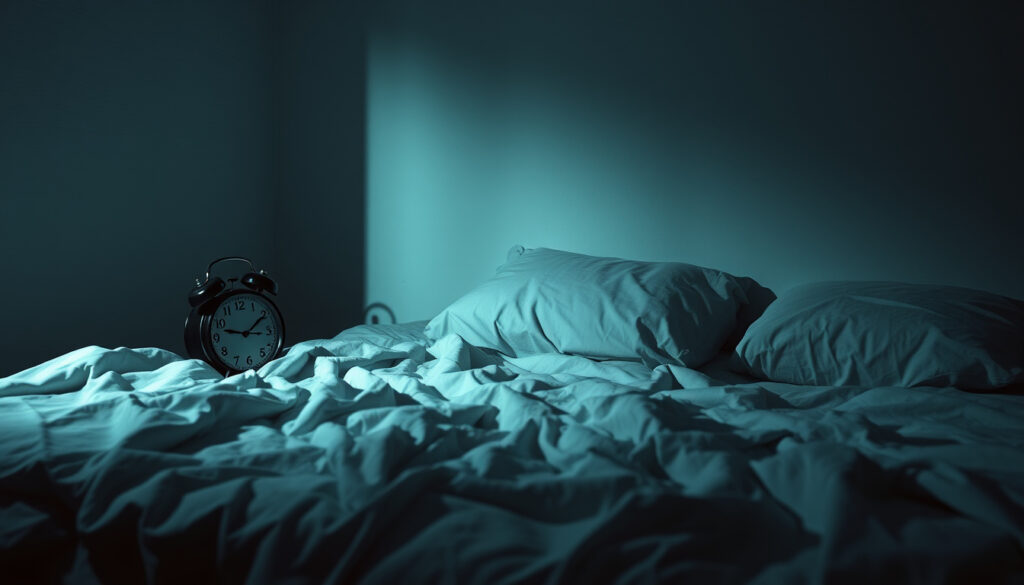
What Is Sleep Paralysis? Causes, Symptoms, and How to Stop It
Anyone who has woken up frozen, unable to move or call out, knows how unnerving sleep paralysis can be. It’s a brief brain-body mismatch that happens during the sleep-wake transition — and it affects roughly 8% of people at least once in their lives. This article explains what science says about why it happens, what you might see or feel, and — most usefully — how to break out of an episode when it strikes.
Lifetime prevalence: 8% of people ·
Common age of onset: Adolescence or young adulthood ·
Typical duration: Few seconds to a few minutes ·
Hallucinations occur in: 75% of cases ·
Recurrence rate: Up to 20% of those affected experience multiple episodes
Quick snapshot
- Sleep paralysis is a REM parasomnia causing temporary atonia upon waking or falling asleep (NCBI StatPearls)
- Hallucinations occur in 75% of episodes (PMC review)
- Isolated sleep paralysis is not dangerous (Healthdirect Australia)
- Exact neurochemical mechanisms behind the dissociation of REM atonia and consciousness
- Why some people have recurrent episodes while others experience only one
- The role of genetics versus environment in predisposition
- Ancient folklore described the “night hag” or “incubus”
- 1657 — Physician Isbrand van Diemerbroeck recorded a medical description
- 1960s–1970s — REM sleep discovered and linked to atonia
- 2024 — PMC review “Recent Insights Into Sleep Paralysis” summarizes mechanisms and treatments
- Focus on sleep hygiene and regular sleep schedules to reduce recurrence (Cleveland Clinic)
- Address underlying triggers: stress, anxiety, sleep deprivation (Sleep Foundation)
- Seek evaluation if episodes are frequent or linked to narcolepsy symptoms (Healthdirect Australia)
Sleep paralysis is a normal REM sleep disruption, not a supernatural event. For the estimated 8% of people who experience it, knowing the science can replace fear with a practical sense of control.
| Attribute | Detail | Source |
|---|---|---|
| Common name | Sleep paralysis | Cleveland Clinic |
| Medical term | Isolated sleep paralysis (ISP) | PMC review |
| Typical duration | Seconds to a few minutes | Cleveland Clinic |
| Lifetime prevalence | Approximately 8% of the population | PMC review |
| Age of first onset | Usually adolescence or early adulthood | NCBI StatPearls |
| Hallucinations rate | 75% of episodes include hallucinations | PMC review |
| Risk factors | Sleep deprivation, stress, mental health conditions, narcolepsy | Sleep Foundation |
What Causes Sleep Paralysis?
Sleep paralysis happens when your mind wakes up but your body’s REM sleep paralysis lingers. During REM sleep, the brainstem sends signals that temporarily paralyze most voluntary muscles — a safety mechanism to keep you from acting out dreams. When this atonia carries over into wakefulness, you’re conscious but trapped, unable to move or speak.
Sleep deprivation and irregular sleep schedules
- Lack of sleep is a common trigger — disrupted sleep schedules push the REM system off balance (Sleep Foundation).
- Irregular bedtimes are also associated with increased risk (NHS inform).
Stress and anxiety
- Stress and anxiety are linked to sleep paralysis risk (Harvard Health).
- Mental health conditions such as PTSD and anxiety disorders can increase episode frequency.
Sleep disorders like narcolepsy
- Narcolepsy is one of the strongest medical associations; it often includes sleep paralysis as a symptom (NCBI StatPearls).
- Other sleep disorders like shift work disorder can also elevate risk.
Genetic factors
- Family studies suggest a genetic component — having a first-degree relative with sleep paralysis raises your own risk.
How Do I Get Out of Sleep Paralysis?
Most episodes resolve on their own in seconds to minutes, but those seconds can feel eternal. These evidence-informed techniques can help break the paralysis faster.
Try to move a small muscle (e.g., finger or toe)
- Concentrate on wiggling a finger or toe — the smallest movement can break the atonia (Harvard Health).
- Many people report that once one muscle twitches, the rest of the body follows.
Focus on breathing and relax
- Controlled breathing can help calm the panic response and shorten the episode (HelpGuide).
- Remind yourself: this is temporary, you are not in danger.
Attempt eye movement
- Eye muscles are often not paralyzed — try looking left and right rapidly to signal the brain to fully wake.
Cultivate awareness that it is temporary
- Knowing that sleep paralysis is harmless and short-lived can reduce fear and recurrence anxiety (Healthdirect Australia).
- Some people use mental mantras like “This will pass in a moment.”
When panic spikes, the urge to fight the paralysis makes it worse. Paradoxically, relaxing into it often ends the episode faster — a counterintuitive but effective strategy.
Is Sleep Paralysis Dangerous?
For most people, the answer is no — but the fear it generates can feel overwhelming. Here’s what the evidence says.
Physical harm during an episode
- Sleep paralysis itself does not cause physical injury — your body is already safely in bed (Healthdirect Australia).
- No cases of death from isolated sleep paralysis have been reported.
Psychological impact
- The experience can be frightening, leading to anxiety about sleep and avoidance behaviors.
- Recurrent episodes may cause distress but are not linked to serious mental illness (PMC review).
When to see a doctor
- If episodes are frequent and interfere with sleep, or if you experience excessive daytime sleepiness, evaluation for narcolepsy or other sleep disorders is warranted (NCBI StatPearls).
- No specific drug is approved solely for isolated sleep paralysis — treatment focuses on underlying causes (Medical News Today).
While sleep paralysis is benign, chronic sleep disruption from recurrent episodes can create a vicious cycle — more fear, worse sleep hygiene, more episodes. Addressing triggers early can interrupt that loop.
What Does a Person See in Sleep Paralysis?
About three out of four episodes involve hallucinations — vivid, often terrifying, but not real. Researchers have identified three classic categories.
Common hallucination types: intruder, incubus, vestibular-motor
- Intruder: Sensing a threatening presence in the room, sometimes with visual or auditory details (PMC review).
- Incubus: Feeling pressure on the chest, difficulty breathing — often interpreted as something sitting on the sleeper.
- Vestibular-motor: Sensations of floating, flying, or out-of-body experiences.
Cultural and personal variations
- In many cultures, the incubus figure becomes a “sleep paralysis demon” — in Newfoundland folklore it’s the “Old Hag,” in Brazil the “Pisadeira.”
- Episodes are shaped by personal beliefs: someone raised with supernatural stories may interpret the same experience as demonic (PMC review).
The sleep paralysis demon phenomenon
- The “demon” is the brain’s attempt to make sense of ambiguous sensory signals — a mix of REM dream imagery and real sensory input (PMC review).
- Popular culture has amplified the demon trope, but the underlying mechanism is purely neurological.
Why Can’t You Scream During Sleep Paralysis?
The inability to scream is one of the most distressing symptoms. The reason is rooted in basic sleep physiology.
REM atonia and muscle paralysis
- During REM sleep, the brainstem inhibits voluntary muscle activity — including the muscles of the chest and throat — to prevent dream enactment (NCBI StatPearls).
- This inhibition persists into wakefulness during sleep paralysis.
The role of the brainstem
- The pons and medulla (parts of the brainstem) release neurotransmitters like glycine and GABA that block motor neurons.
- This creates a reversible “functional transection” of the spinal cord — the brain is awake but the body cannot move (PMC review).
Why vocal cords are affected
- The laryngeal muscles are paralyzed just like the arms and legs — making screaming impossible even though you are fully conscious.
- The sensation of trying to scream and being unable to is a direct result of this motor block, not a sign of suffocation.
The inability to scream often convinces people they are in grave danger. Understanding that the brainstem is simply finishing its REM “off switch” helps separate fear from fact — and can prevent panic-fueled worsening of episodes.
Confirmed facts
- Sleep paralysis is a REM parasomnia with temporary atonia upon awakening or falling asleep.
- Hallucinations are common and result from dream-like mentation intruding into wakefulness (PMC review).
- Lifestyle factors such as sleep deprivation and stress trigger episodes (Sleep Foundation).
- Isolated sleep paralysis is not dangerous and does not cause physical harm (Healthdirect Australia).
What’s unclear
- Exact neurochemical mechanisms that cause the dissociation between REM atonia and consciousness.
- Why some individuals experience recurrent episodes while others have only one.
- The role of genetic vs environmental factors in predisposition.
- Effectiveness of specific pharmacological interventions for frequent episodes (Medical News Today).
“Sleep paralysis is a temporary condition that is generally not harmful, but it can be frightening. Understanding the triggers can help people prevent episodes.”
— Dr. Reena Mehra, sleep specialist at Cleveland Clinic
“Sleep paralysis is when you cannot move or speak as you are waking up or falling asleep. It can be scary but it’s harmless.”
“Mostly Benign: Sleep Paralysis Demons Explained – the phenomenon is a natural part of the sleep-wake transition.”
— Journalist covering CU Anschutz research
For the millions who experience sleep paralysis, the line between nightmare and reality blurs for a brief, terrifying moment. But the evidence is consistent: it is a benign, self-limiting event rooted in normal REM sleep biology. The real danger lies not in the paralysis itself, but in the fear that leads to chronic sleep disruption. For the average person trying to understand what is sleep paralysis, the most powerful tool is knowledge — knowing that the demon on your chest is just your brainstem finishing its nightly maintenance.
naturesbest.co.uk, pubmed.ncbi.nlm.nih.gov, parkavenuemedicine.com
After a stressful week, I experienced a vivid episode myself, which led me to this intriguing exploration of sleep paralysis and its explanation of the scientific causes.
Frequently asked questions
Is sleep paralysis a warning of a serious health problem?
In most cases, no. Isolated episodes are not a sign of serious illness. However, recurrent episodes combined with excessive daytime sleepiness may indicate narcolepsy or another sleep disorder that warrants medical evaluation (NCBI StatPearls).
What is the sleep paralysis demon?
The “demon” is a vivid hallucination — often an intruder or pressure on the chest — caused by REM dream imagery bleeding into wakefulness. Cultural beliefs shape how people interpret the experience (PMC review).
What does Islam say about sleep paralysis?
In some Islamic traditions, sleep paralysis has been interpreted as an attack by a jinn. Many scholars now point to the medical explanation while respecting the cultural context. The core experience is identical regardless of interpretation.
Can sleep paralysis kill you?
No. There are no recorded cases of death from sleep paralysis alone. It is a temporary, harmless state that resolves on its own (Healthdirect Australia).
How long does sleep paralysis last?
Episodes typically last from a few seconds to about two minutes. They end spontaneously or when the person fully wakes (Cleveland Clinic).
Can children experience sleep paralysis?
Yes, though it is less common. Onset is usually during adolescence or early adulthood. Children with disrupted sleep or family history may be more vulnerable (NCBI StatPearls).
Are there medications for sleep paralysis?
No medication is specifically approved for isolated sleep paralysis. Treatment focuses on improving sleep hygiene and addressing underlying conditions like narcolepsy or anxiety (Medical News Today).
Related reading: Carpal Tunnel Syndrome: Causes, Symptoms & Treatment · What Causes Low Blood Sugar Without Diabetes? Symptoms & Care
More related posts
 Star Wars: The Rise of Skywalker – Box Office & Reception
 Los Angeles Rams vs Philadelphia Eagles Match Player Stats
 Couples Therapy Near Me: Cost, Methods & Ireland Guide
 I Pedro Pa cal Married? Relation hip Timeline & Fact 2025
 Purina Pro Plan Sensitive Skin and Stomach – In-Depth 2025 Review
 How to Hard Reset iPhone – Steps for All Models No Data Loss
 What Is a Bunion? Causes, Treatment, and Prevention
 House Cleaning Services Near Me: Ireland Rates & Tasks
