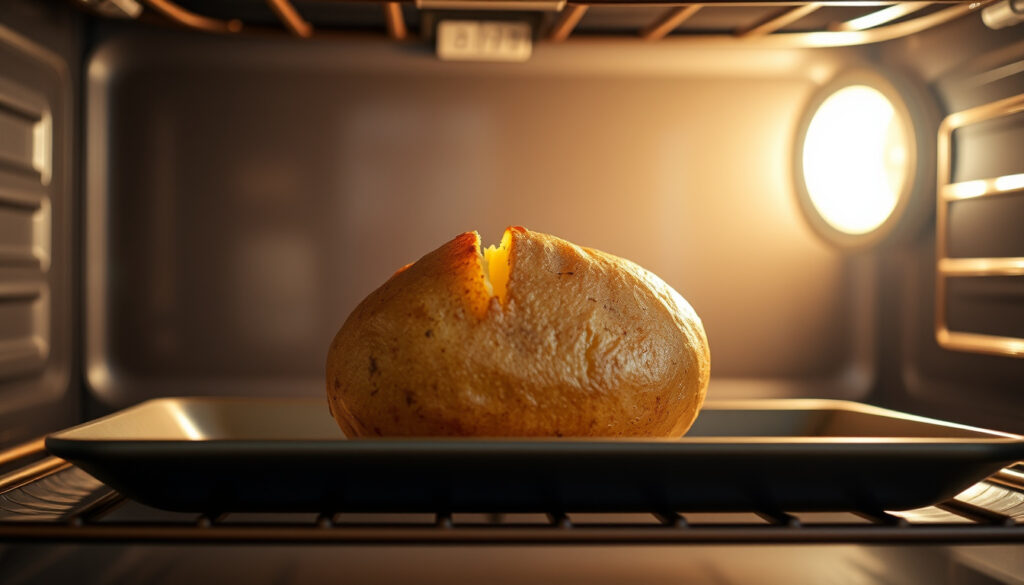
Baked Potato in Oven: Perfect Time & Temp
Anyone who’s ever pulled a rock-hard potato out of the oven knows the disappointment of a failed baked potato. Getting that fluffy interior and crackling skin isn’t luck—it’s a matter of temperature, timing, and a few simple techniques, from the ideal oven temperature to the foil debate.
Optimal oven temperature: 425°F (220°C) · Typical baking time: 45–60 minutes · Best potato variety: Russet (Idaho) · Internal doneness temperature: 205–210°F
Quick snapshot
- 425°F is the standard temperature for crisp skin (Savory Experiments)
- Pricking potatoes prevents bursting (Love and Lemons)
- Baking time varies with potato size (KitchPrep)
- Whether foil is beneficial for crispiness is debated (Love and Lemons advocates no foil)
- Optimal baking time can vary by oven calibration (Love and Lemons)
- Perfect baked potato ready in 45–60 minutes at 425°F
- No urgent updates – method remains standard
- Serve immediately with toppings of choice
- Leftover potatoes can be reheated or repurposed
The table below summarizes the essential parameters for baking a potato.
| Potato type | Russet (Idaho) |
| Oven temperature | 425°F (220°C) |
| Baking time | 45–60 minutes |
| Foil | Optional – affects skin texture |
| Internal done temp | 205–210°F |
| Prep steps | Scrub, dry, prick, oil, salt |
How much time do you bake a potato in the oven?
What is the ideal oven temperature?
The sweet spot for a crisp skin and fluffy interior is 425°F (220°C). Multiple recipe sources converge on this temperature. Savory Experiments (cooking blog) calls it the standard, while Love and Lemons (recipe site) uses the same temp for a fork-tender result. Some cooks push to 450°F for faster crisping, but 425°F gives a safer window for even cooking.
Preheat the oven to 425°F. Bake 45 to 60 minutes, or until the potato is fork-tender and the skin is crisp.
Cranking to 450°F may crisp skin faster, but it also raises the risk of burning the exterior before the center is done. The 425°F middle ground is the most forgiving for home ovens.
How long at 180°C (350°F)?
If you’re working with a lower oven, expect longer baking. According to a time-temperature chart from KitchPrep (cooking resource), a medium russet at 375°F (190°C) takes 60–75 minutes. At 180°C (350°F), you’re looking at roughly 70–80 minutes. The skin won’t crisp as well at this range, so finish with a few minutes under the broiler if needed.
Heat the oven to 220°C/200°C fan/gas 7. Rub a little oil over each potato. Bake for 20 mins, then turn down to 190°C/170°C fan/gas 5 and bake for 45 mins.
How long at 200°C (400°F)?
At 400°F, a medium russet needs about 50–60 minutes, per Savory Experiments. That’s the lower end of the optimal range—fine if you’re short on time, but you’ll want to check doneness early.
How to tell when a potato is done?
- Fork test: A fork should slide in with little resistance. Love and Lemons uses this as the key test.
- Internal temperature: Aim for 205–210°F for a fluffy interior, as noted by KitchPrep.
- Squeeze test: Gently squeeze – the potato should yield slightly.
The implication: don’t rely on time alone – ovens vary, and potato size matters. A thermometer is your best friend for consistency.
The home baker: For a medium russet at 425°F, 45–60 minutes yields a fluffy interior and crisp skin. For lower temps, extend time and consider a broiler finish.
Should I wrap a potato in foil to bake it in the oven?
What does foil do to the skin?
Foil traps steam, resulting in softer, less crisp skin. The Suburban Soapbox (recipe blog) uses no foil and bakes directly on the rack for maximum air circulation (The Suburban Soapbox). Love and Lemons also recommends no foil for the crispiest result.
Does foil affect baking time?
Foil does not significantly alter cooking time, according to most sources. The potato still needs the same 45–60 minutes at 425°F. The difference is in texture, not speed.
When should you wrap in foil?
- If you prefer a softer skin (e.g., for loading with toppings).
- If you want to hold potatoes after baking – wrap in foil to keep warm.
- Some recipes wrap halfway to prevent over-browning while the center finishes cooking.
Pros and cons of foil vs no foil
Upsides
- No foil: crispier, crackling skin
- No foil: better texture contrast
- No foil: less waste
Downsides
- No foil: skin may darken faster
- Foil: soft skin may feel less “baked”
- Foil: can make skin soggy if left on after baking
The catch: there’s no right answer – it’s a matter of preference. If you want a classic steakhouse-style potato with a soft skin, use foil. For a restaurant-quality crisp skin, skip the foil.
How to do the perfect baked potato in the oven?
How to prepare the potato?
- Scrub the potato under running water to remove dirt.
- Dry thoroughly – moisture is the enemy of crisp skin.
- Prick several times with a fork to let steam escape. Love and Lemons emphasizes this step to prevent bursting.
- Rub with olive oil and sprinkle with salt – this creates the crispy crust.
What oil and salt to use?
Neutral oils like vegetable or canola work well; olive oil adds flavor but burns at higher temperatures. Gimme Some Oven (recipe site) uses olive oil and salt. Coarse salt (kosher or sea salt) draws out moisture and creates a crunchy texture. The Suburban Soapbox also recommends coarse salt for the best crunch.
Should you bake directly on the rack?
Yes – placing potatoes directly on the oven rack allows hot air to circulate all around, promoting even cooking and crisp skin. Alternatively, use a baking sheet lined with parchment for easier cleanup, but flip the potatoes halfway.
How to serve?
Let the potato rest for 5 minutes after baking – this allows the interior to finish setting. Then slice open, fluff with a fork, and add toppings: butter, sour cream, cheese, chives, bacon bits, or whatever you like.
For a time-saving alternative, microwave the potato for 5 minutes first, then finish in the oven for 15–20 minutes at 425°F to get some crispness.
For another easy comfort food, check out our Big Mac Sauce Recipe to go with your potato.
Why this matters: each step from scrubbing to resting contributes to the final texture. Skipping any one leads to a subpar result.
The home cook: Scrub, dry, prick, oil, salt, and bake at 425°F directly on the rack for 45–60 minutes. Rest 5 minutes before serving.
What are common potato baking mistakes?
Not pricking the potato
Forgetting to prick the potato can cause it to burst in the oven. The escaping steam needs an exit – without vents, pressure builds up and the potato explodes. Love and Lemons calls this a must (see snapshot above).
Using the wrong potato type
Waxy potatoes (red, new, fingerling) have a high moisture content and low starch, yielding a dense, gummy interior when baked. Russet (Idaho) potatoes are the gold standard because of their high starch and low moisture. Potato Goodness (potato industry site) confirms russets are best for baking.
Baking at too low a temperature
Low temperatures (below 375°F) lead to long cook times and tough skin. The interior may eventually cook, but the skin won’t crisp. Kendell Kreations (home cooking blog) stresses 425°F for the ideal balance.
Getting the temperature right is the single most important factor for a successful baked potato.
Overcrowding the oven
Placing too many potatoes on the rack traps steam and prevents the skin from crisping. Leave at least an inch of space between each potato for proper air circulation.
youtube.com, pantryprofessor.com, thelivinglook.com, businessinsider.com
Frequently Asked Questions
Can I bake potatoes at 350°F?
Yes, but it will take longer (70–80 minutes) and the skin won’t get as crisp. Use a broiler for a few minutes at the end to improve crispness.
How to make a baked potato in the microwave?
Prick the potato, microwave on high for 5–7 minutes per potato, flipping halfway. The skin will be soft; for a crisp finish, transfer to a 425°F oven for 10–15 minutes.
Should I oil the potato skin before baking?
Yes, oil helps the skin crisp and adds flavor. Olive oil, vegetable oil, or canola oil all work. Coarse salt also helps draw out moisture for a crunchier texture.
How to tell when a baked potato is done without a thermometer?
Use the fork test: a fork should slide in with little resistance. Also, the potato should yield slightly when squeezed gently with an oven mitt.
Can I use sweet potatoes instead of russet?
Yes, but sweet potatoes have a different texture – they are denser and less starchy. They bake well at 425°F but may need 5–10 minutes less time. Check for fork tenderness.
How to reheat a baked potato?
Reheat in a 350°F oven for 10–15 minutes, or microwave for 2–3 minutes. For crispier skin, use an air fryer at 400°F for 5–7 minutes.
What is the difference between baking and roasting potatoes?
Baking typically refers to whole potatoes cooked at a moderate temperature until tender inside. Roasting often involves cutting potatoes into pieces, coating with oil, and cooking at higher heat (400°F–450°F) for a crispy exterior.
The home cook: Sticking to 425°F and avoiding common mistakes like skipping the fork or using waxy potatoes ensures a perfect baked potato every time.
More related posts
 I Pedro Pa cal Married? Relation hip Timeline & Fact 2025
 Where to Watch Spider-Man: No Way Home on Disney+ and Netflix
 T-Mobile Phone Deals – Save Up to $830 on Flagships
 Carpal Tunnel Syndrome: Causes, Symptoms & Treatment
 Sonic the Hedgehog 2020: Box Office, Cast, Where to Watch
 Big Mac Sauce Recipe: Ingredients and How to Make It
 How to Train Your Dragon Cast: 2025 Live-Action Actors & Original Voices
 Tennessee Titans vs 49ers Player Stats | Dec 14, 2025
