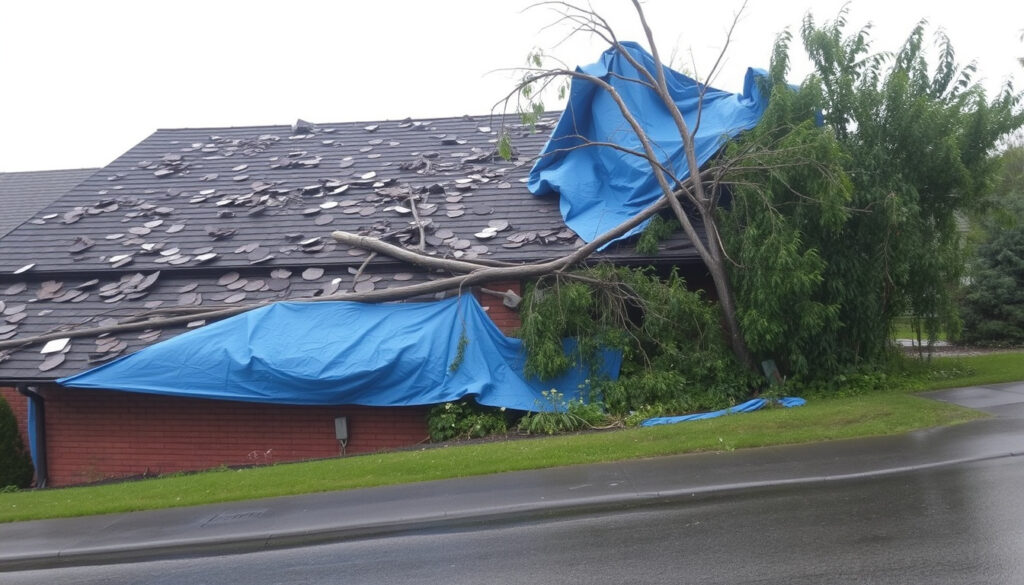
Storm Damage Restoration Near Me: How to Vet Contractors
When a storm tears through your roof or sends water into your basement, the last thing you need is a contractor who disappears after the deposit. This guide walks you through the specific checks—from IICRC credentials to state licensing boards—that separate reliable restoration pros from those who leave you with a leaky repair and a stack of unpaid bills.
IICRC credentials required: WRT, ASD, AMRT per damage type ·
General liability minimum: $1 million per occurrence ·
License exemption thresholds: $500 (California) to $75,000 (some states) ·
Red flag: No state contractor license ·
Red flag: Full payment demanded upfront
Quick snapshot
- Absence of a state contractor license is a verifiable red flag (National Storm Authority)
- Demanding full payment upfront is a red flag (National Storm Authority)
- State license status should be confirmed through the relevant licensing board (National Disaster Authority)
- License-exemption thresholds vary widely, from $500 in California to $75,000 in some jurisdictions (reported by National Storm Repair)
- Carrier-specific insurance requirements can exceed state minimums (National Storm Repair)
- Operational vetting criteria (equipment, staffing, response reach) are not standardized (National Disaster Authority)
- Water damage requires immediate extraction within 24–48 hours to prevent mold growth; look for IICRC AMRT certification (National Disaster Authority)
- Roof tarps should be applied within 24 hours of a storm to prevent secondary damage (National Disaster Authority)
- Contact your insurance company to file a claim before authorizing any work (Trusted Storm Damage)
- Get at least three written estimates from licensed, IICRC-certified contractors (Trusted Storm Damage)
- Verify the contractor’s familiarity with Xactimate for insurance claim compatibility (National Disaster Authority)
The pattern is clear: vetting protects your wallet and your property.
| Criteria | Details |
|---|---|
| IICRC credentials required | WRT (Water Damage Restoration), ASD (Applied Structural Drying), AMRT (Applied Microbial Remediation) per damage type (National Disaster Authority) |
| State license check | Confirm license status through the state licensing board; structural work almost always requires a general contractor license (National Storm Repair) |
| Insurance requirements | General liability: $1M per occurrence; workers’ compensation; pollution liability for mold/biohazard (Trusted Storm Damage) |
| EPA RRP certification | Required for pre-1978 homes to handle lead paint safely (National Disaster Authority) |
| Red flags | No state license, full payment upfront, no local office address, out-of-state business registration (National Storm Authority) |
| Complaint records | Check BBB and state Attorney General databases for formal disputes (Trusted Storm Damage) |
| Bonding | Confirm bond amount and compare to project value (Trusted Storm Damage) |
| Xactimate familiarity | Important for insurance claim compatibility and adjuster coordination (National Disaster Authority) |
| Permit requirements | If a permit is required, the contractor pulling the permit must hold a valid license on file with the municipality (National Storm Repair) |
What Does Storm Damage Restoration Involve?
Storm damage restoration is a multi-step process that goes far beyond patching a hole. It typically starts with emergency water extraction and roof tarping to prevent further damage, followed by drying, cleaning, and structural repairs. The exact scope depends on whether you’re dealing with wind, hail, or flood damage.
According to the National Disaster Authority (restoration industry vetting resource), a qualified contractor should provide a detailed scope of work, photo documentation of moisture levels, and a moisture mapping protocol. These documents are your proof that the job meets industry standards.
The implication: without these documents, you have no way to verify the work was done correctly.
Many homeowners assume “restoration” is a single service. In reality, the difference between water damage and flood damage matters for insurance coverage—flood damage typically requires a separate policy.
How to Find a Reliable Storm Damage Contractor Near You
Finding a trustworthy contractor starts with verifying their credentials before they set foot on your property. Here’s a step-by-step process based on professional vetting guidelines.
- Check state licensing. Visit your state’s licensing board database and confirm the contractor’s license class and disciplinary history. Trusted Storm Damage recommends this as the first step.
- Verify IICRC certifications. Ask for credentials in WRT, ASD, or AMRT depending on the damage type. The National Disaster Authority notes that the certification should be active and specific to the damage category.
- Request a Certificate of Insurance. Confirm active general liability insurance ($1M minimum) and workers’ compensation. The policy should list your property address (Trusted Storm Damage).
- Check for red flags. A contractor who demands full payment upfront, has no local office, or cannot provide comparable-loss references is a risk (National Storm Authority).
- Look up complaints. Search the BBB and your state Attorney General’s office for formal disputes.
- Get three written estimates. Compare not just price but scope: do they include moisture mapping, drying equipment, and insurance claim assistance?
The pattern: reputable contractors welcome this scrutiny. If they hesitate or push back on any of these checks, that’s a signal to walk away.
How Much Does Storm Damage Restoration Cost?
Costs vary widely based on damage type, square footage, and your location. While exact pricing depends on the job, industry sources highlight key cost drivers:
- Emergency water extraction: typically $500–$1,500 for a standard room
- Roof tarping: $200–$800 per tarp
- Full structural drying: $1,000–$5,000+ depending on equipment
- Mold remediation: $1,500–$6,000+ for affected areas
According to National Storm Repair (licensing and cost analysis), license-exemption thresholds can affect whether a contractor needs a permit, which in turn influences cost. The industry minimum for general liability insurance is commonly $1 million per occurrence, but carrier-specific requirements may push higher.
The catch: a lowball estimate often means corners will be cut.
Storm chasers often quote a “free inspection” and then pressure you into signing a contract before you’ve had a chance to check their license. If the estimate is far below the others, the quality of work may suffer.
Does Insurance Cover Storm Damage Restoration?
Standard homeowners insurance typically covers wind and hail damage, but flood damage requires a separate policy through the National Flood Insurance Program (NFIP). Water damage from a burst pipe is usually covered; water damage from ground flooding is not.
When you file a claim, your insurer may recommend a contractor from their direct repair program. The National Disaster Authority points out that contractors familiar with Xactimate—the software insurers use to estimate costs—can smooth the claim process. However, you are not obligated to use their recommended contractor.
The implication: you can choose your own contractor, but you must ensure they are licensed, insured, and willing to work with your adjuster. If you hire an unlicensed contractor, your insurer may deny the claim.
How to Prevent Mold After Storm Damage
Mold can begin growing within 24–48 hours of water intrusion, making rapid response critical. The National Disaster Authority recommends that contractors hold an AMRT (Applied Microbial Remediation) certification for mold-related work. Key prevention steps include:
- Extract standing water immediately using pumps and wet vacuums
- Set up industrial dehumidifiers and air movers to dry affected areas
- Remove and discard water-damaged drywall, insulation, and carpet within 24 hours
- Disinfect surfaces with antimicrobial solutions
- Monitor moisture levels with a moisture meter to ensure drying is complete
The trade-off: rushing to dry without proper equipment can trap moisture in walls, leading to hidden mold that costs thousands to remediate later.
Comparison: National Franchise vs. Local Independent Contractor
One of the key decisions homeowners face is whether to go with a national franchise like SERVPRO or a local independent contractor. Here’s how they compare across vetting criteria.
| Criteria | National Franchise | Local Independent |
|---|---|---|
| IICRC certification | Typically required by franchise standards | Varies; must be verified individually |
| State licensing | Franchise ensures compliance per location | Must be confirmed via state board |
| Insurance coverage | Corporate policy often meets minimums | Must request Certificate of Insurance |
| Local knowledge | Trained to national protocols | Familiar with local building codes and climate |
| Cost | Often higher due to overhead | May be more competitive |
| Accountability | National brand reputation at stake | Depends on local reputation and references |
The pattern: a national franchise offers consistency, but a well-vetted local contractor can provide more personalized service. The key is to apply the same vetting checklist to both.
Pros and Cons of Hiring a Storm Damage Restoration Contractor
Upsides
- Professional drying equipment reduces mold risk
- Insurance claim assistance speeds up reimbursement
- Licensed contractors provide permits and code compliance
- Warranty on workmanship protects against future issues
Downsides
- Cost can be higher than doing it yourself
- Scam contractors are common after storms
- You may need to vacate during major restoration
- Insurance adjustments may not cover full cost
The takeaway: hiring a pro makes sense when speed, safety, and insurance coordination matter, but you must be ready to vet thoroughly.
Confirmed Facts vs. What Remains Unclear
Confirmed facts
- Absence of a state contractor license is a red flag (National Storm Authority)
- Demanding full payment upfront is a red flag (National Storm Authority)
- State licensing board databases are publicly searchable (Trusted Storm Damage)
- IICRC certifications are industry standards for water, fire, and mold damage (National Disaster Authority)
What’s unclear
- Exact license-exemption thresholds vary by state, with reported figures from $500 to $75,000 (National Storm Repair)
- Whether carrier-specific insurance requirements exceed state minimums is not standardized (National Storm Repair)
- Operational vetting guidelines (equipment, staffing) are not publicly harmonized across the industry (National Disaster Authority)
“Disaster-restoration vetting should verify active IICRC credentials for the specific damage category, such as WRT or ASD for water damage and AMRT or AMRS for mold-related work.”National Disaster Authority (restoration industry vetting resource)
“Structural storm repair work generally requires a general contractor license in virtually all jurisdictions, while cosmetic repair may fall under lower thresholds.”National Storm Repair (licensing and certification analysis)
“Consumers should verify state contractor license status, license class, and disciplinary history using the relevant licensing board database.”Trusted Storm Damage (homeowner guidance)
palmbld.com, chandlerrestorationcompany.com, disb.dc.gov, ldi.la.gov, youtube.com, stormrestorationauthority.com, stormlex.com, 561roofers.com
For those seeking storm damage restoration near me, it is worth considering the specific challenges faced in regions like Ireland, where recent storms have highlighted the need for reliable contractors, as detailed in this guide on storm damage restoration in Ireland.
Frequently asked questions
Does SERVPRO replace flooring?
SERVPRO offers water damage restoration that often includes removing and replacing water-damaged flooring, but they do not typically install new flooring as a general contractor. Their focus is restoration, not replacement. If new flooring is needed, they may subcontract or recommend a flooring specialist.
How long does storm damage restoration take?
Typical residential restoration takes 3–7 days for water extraction and drying, followed by 1–3 weeks for structural repairs depending on the extent of damage. Major storms with high demand can extend timelines.
How much does storm damage restoration cost?
Costs vary widely. Emergency water extraction averages $500–$1,500 per room, roof tarping $200–$800, full structural drying $1,000–$5,000, and mold remediation $1,500–$6,000. Get multiple written estimates.
What is the first step after storm damage?
First, ensure safety—turn off electricity if water is present. Then document the damage with photos, contact your insurance company to file a claim, and call a licensed, IICRC-certified restoration contractor for emergency tarping and water extraction.
How to find a reliable storm damage contractor?
Verify state license status, check IICRC credentials, request a Certificate of Insurance, search BBB and Attorney General complaint records, and get three written estimates. Never pay full payment upfront.
What is the difference between water damage and flood damage?
Water damage from a burst pipe or roof leak is typically covered by homeowners insurance. Flood damage from rising water (e.g., river overflow, storm surge) requires a separate flood insurance policy through the NFIP.
Do I need to vacate during restoration?
For major water extraction and structural drying, you may be asked to vacate for 1–3 days due to noise from equipment and safety concerns. Mold remediation may require longer vacating depending on the affected area.
What are common water damage restoration services?
Services include emergency water extraction, roof tarping, structural drying, dehumidification, mold remediation, cleaning and sanitizing, and repair of drywall, flooring, and insulation.
Related reading
- Renters Insurance Ireland Guide — Understanding insurance basics can help with storm damage claims.
- Cheap Oil Change Near Me — A guide to finding local service providers, similar to vetting restoration contractors.
For homeowners in the path of the next storm, the choice is clear: spend 30 minutes vetting credentials now, or risk months of repair delays and financial headaches.
More related posts
 Toronto Raptor v Cleveland Cavalier Player Stat : Game 5
 Ford Mustang Mach-E: 2026 Review, Price, and Buying Guide
 Best Movies on HBO Max (2026): Top 10 & What to Watch Now
 What Is Sleep Paralysis? Causes, Symptoms, and How to Stop It
 Figure Skating Milano Cortina 2026: Schedule, Participants, Tickets
 Where to Watch Spider-Man: No Way Home on Disney+ and Netflix
